Your email list may be growing, but sales are not. That gap can feel frustrating, especially after you have spent time collecting leads. We hear this from small business owners all the time. The problem is rarely the list itself. More often, the problem is that the emails are not built to move people forward.
If you run a digital marketing agency or manage one, this becomes even more complicated. You need messages that do more than land in inboxes. They need to support lead generation, brand awareness, conversion optimization, and customer retention. From our office in Commack at Northgate Shopping Center, we have seen how quickly a simple automation plan can improve response quality. The key is to stop thinking in blasts and start thinking in sequences.
Why most small business email blasts disappear into the inbox void
The hidden cost of sending one message to everyone on your list
A one-size-fits-all blast usually creates one of three outcomes: silence, unsubscribes, or ignored promotions. That is expensive, even if it feels free. You may spend hours on copy, design, and scheduling, yet the return stays flat. The hidden cost is not just wasted effort. It is the lost opportunity to send a message that matches a real need.
We saw this with a local service business in Suffolk County that sent the same offer to new leads, old customers, and inactive contacts. Open rates were uneven, and replies were mostly from the wrong audience. Once the list was segmented by behavior and service interest, the tone changed fast. People started responding to messages that actually fit their situation.
Why your welcome email series often matters more than your monthly newsletter
A newsletter can keep your brand visible. A welcome email series can shape what happens next. That is why email marketing automation for small businesses often starts there. When someone joins your list, they are paying attention. They are fresh, curious, and far more likely to act.
Here is the part most owners miss: the first few emails teach people what kind of business you are. They set expectations, answer basic questions, and reduce hesitation. A strong welcome email series can introduce services, highlight proof, and guide readers toward the next step without sounding pushy. By contrast, a monthly newsletter often goes to people who are already lukewarm.
What email deliverability best practices have to do with real revenue
Deliverability sounds technical, but the business impact is simple. If emails miss the inbox, they cannot create revenue. That means list hygiene, sender reputation, and engagement signals matter. So do subject lines, spam-triggering language, and how often you send. These are not minor details. They shape whether your audience even sees your message.
A small business email marketing strategy should also respect timing and relevance. People respond when emails feel timely and useful. Industry research from HubSpot and other marketing analytics sources keeps showing the same pattern: relevance improves engagement, and engagement supports deliverability. That is why email deliverability best practices and ROI tracking belong in the same conversation. If you cannot measure what arrives, you cannot improve what converts.
The difference between a busy inbox and a sales funnel that actually moves
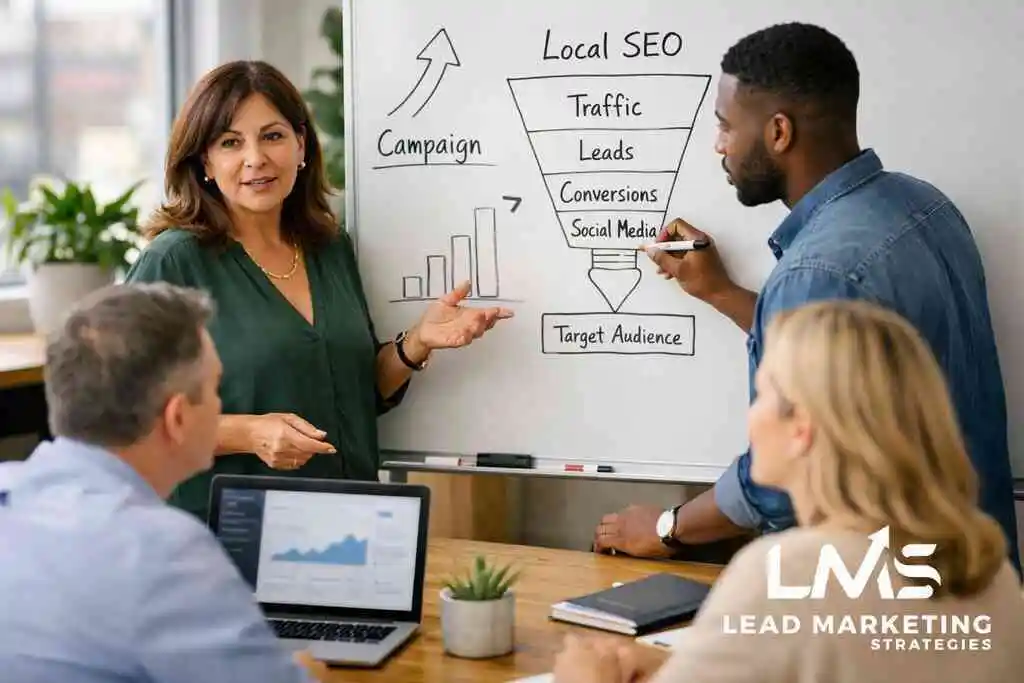
A busy inbox can create the illusion of activity. A functioning sales funnel creates movement. Those are not the same thing. One is noise. The other is progress. You want automated email sequences that guide readers from awareness to action.
A good funnel uses email campaign automation to answer real questions at the right time. It might introduce your Long Island marketing agency services, explain your process, or invite a consultation. It might also support a marketing strategy that includes SEO services, social media marketing, and PPC management. The point is not volume. The point is momentum.
Which automated email sequences should a small business build first
The lifecycle email marketing map that turns strangers into repeat buyers
Start with lifecycle email marketing, because it mirrors how people actually buy. First, they discover you. Then they consider you. Then they decide. After that, they may buy again, refer someone, or go quiet. Your email automation should follow that path instead of forcing everyone into the same funnel.
A simple lifecycle map usually includes these pieces:
- Welcome email series
- Lead nurturing emails
- Customer onboarding emails
- Promotional email strategy
- Re-engagement email campaigns
- Abandoned cart recovery emails, when ecommerce applies
If your business serves both B2B email marketing automation and B2C lead generation, segmentation becomes even more important. A law firm, agency, or contractor needs different timing than an ecommerce brand. A local business in Commack may also need different messaging than a national marketing agency serving all 50 states. That is where audience targeting starts to pay off.
When abandoned cart recovery emails make sense for ecommerce and when they do not
Abandoned cart recovery emails are powerful, but they are not universal. They make sense when someone has added a product, shown intent, and left before checkout. They do not make sense if there was no shopping cart or no clear buying path. That sounds obvious, yet many businesses copy ecommerce tactics without checking fit.
For ecommerce marketing, these emails can recover lost sales and reduce friction. For service businesses, a different automation may work better, such as quote follow-ups or booked-call reminders. If your business has a clear purchase path, abandoned cart recovery emails for ecommerce brands can support conversion optimization. If not, do not force the pattern. Build the sequence around behavior, not buzzwords.
How lead nurturing emails and customer onboarding emails work together
Lead nurturing emails warm people up before the sale. Customer onboarding emails reduce confusion after the sale. Together, they protect the whole customer journey. That is why they should not live in separate corners of your marketing stack. They belong in one lifecycle plan.
In our experience, the biggest mistake is stopping communication after the first conversion. That leaves money on the table. A strong onboarding sequence can explain what happens next, where to find resources, and how to get support. Meanwhile, nurturing emails can keep educating leads who are not ready yet. When these two systems work together, customer retention gets easier.
The role of audience segmentation strategy in B2B email marketing automation and B2C lead generation
Segmentation is not just about names and job titles. It is about intent, behavior, and stage. A consultant, retailer, and medical practice may all want leads, but they need different messages. That is why an email segmentation strategy should account for service interest, engagement history, and source of entry. Audience segmentation strategy is what turns generic email marketing into personalized email marketing.
For B2B email marketing automation, longer sales cycles usually require more education. For B2C lead generation, speed and clarity often matter more. The message should change based on what the reader already knows. A visitor who read SEO services content should not receive the same email as someone who asked about web design company work. That level of precision improves audience targeting and click-through rate optimization.
Why behavior-based email triggers usually outperform generic drip email campaigns
Behavior-based email triggers respond to actions. Generic drip email campaigns only respond to time. That difference matters. If someone downloads a guide, browses a service page, or clicks on pricing content, they are telling you something. A triggered email can answer that signal immediately.
This is where marketing automation for small businesses becomes practical. You can set automated follow-ups for form fills, page visits, abandoned inquiries, or repeat clicks. The result feels more personal, even when it runs automatically. A broad drip sequence can still have value, but behavior-based messages usually outperform it because they match intent. That is the difference between automation and automation with judgment.
How to build email automation that keeps working after the launch
Setting SMART goals for email marketing strategy for small businesses and ROI tracking
If you do not set a target, you cannot judge the result. SMART goals solve that problem. They make your email marketing strategy specific, measurable, achievable, relevant, and time-bound. For example, you may want more booked consultations, more repeat purchases, or better lead quality. Each goal needs a metric.
Use ROI tracking for email marketing campaigns to connect email performance to business outcomes. Open rates alone are not enough. Clicks, replies, conversions, and customer value matter more. In many cases, marketing analytics for email campaigns should sit beside Google Analytics 4 data and CRM records. That gives you a cleaner view of what actually works.
Choosing email marketing and CRM integration that supports marketing analytics, not just sending
Sending emails is easy. Connecting them to real customer data is the hard part. That is why email marketing and CRM integration matters. It lets you track lead source, engagement, sales stage, and follow-up history in one place. Without that, your automation may look busy but remain blind.
If you are using a marketing automation for small businesses approach, make sure the system supports reporting. You want to know which audience segments respond, which sequences convert, and which contacts need re-engagement. The best setup helps with marketing analytics, not just message delivery. That is especially useful for service business lead generation and ecommerce email marketing alike.
The subject line optimization and conversion-focused email content that raise click-through rates
A weak subject line kills good content before it gets read. Subject line optimization matters because attention is limited. Short, clear, and specific usually beats clever and vague. You do not need to sound dramatic. You need to sound relevant. That alone can improve email engagement metrics.
Inside the email, conversion-focused email content should make the next step obvious. Use one primary call to action. Keep the message focused. If you need help shaping that voice, conversion-focused email content for small business growth can support the work. Strong content, paired with subject line optimization, tends to outperform long-winded messages that try to do everything at once.
How mobile-friendly email design and email workflow optimization protect engagement
Most people check email on a phone first. That means mobile-friendly email design is not optional. Buttons should be easy to tap. Text should be readable without zooming. Images should not slow everything down. If the experience feels awkward, readers leave quickly.
Email workflow optimization also matters behind the scenes. Good workflows reduce delays, duplicate sends, and broken logic. They help your sequences stay clean as your list grows. For brands that need more support here, mobile-friendly email design and optimization can protect engagement and reduce friction. That is especially important for local business email marketing, where speed and clarity often decide the response.
What to test, measure, and refine when the goal is customer retention and sales funnel automation
Testing should focus on one variable at a time. Start with subject lines, send times, CTA placement, and message length. Then move into segmentation and sequence timing. You do not need to test everything at once. That usually creates confusion instead of insight.
Here is a simple testing list you can use:
- Subject lines
- Preview text
- CTA wording
- Email length
- Segment-specific offers
- Send timing
- Mobile layout
Customer retention improves when your follow-up feels thoughtful. Sales funnel automation improves when each message has a purpose. If you are tracking opens but not revenue, you are only seeing part of the story. That is why marketing analytics and ROI tracking belong in every review.
When to ask a digital marketing consultant for help with affordable marketing services and growth planning
Some teams can build a simple sequence alone. Others need a sharper strategy. A digital marketing consultant helps when your audience is growing, your message is scattered, or your results are hard to interpret. That is often the point where affordable marketing services become smarter than trial and error. You save time, and you avoid sending the wrong message to the wrong people.
At Lead Marketing Strategies in Commack, we work with businesses across Long Island, Suffolk County, New York, and all 50 states. We help align email marketing with SEO services, website development, PPC management, content marketing, and lead generation. If your email automation needs to support a broader digital marketing strategy for email lead growth, that coordination matters. A connected plan usually performs better than disconnected tactics.
One business owner we spoke with had strong traffic from Google Ads management, but weak follow-up after inquiries. The problem was not lead volume. It was the sequence after the form fill. Once the email workflow changed, the sales team spent less time chasing cold leads and more time talking to people who were ready. That is the real value of automation: it gives your best opportunities a better chance to move.
If your email system feels busy but underwhelming, tighten the strategy, simplify the path, and measure what matters. Start by reviewing one welcome series, one nurture flow, and one re-engagement sequence. Then connect them to your CRM and check the numbers honestly. You do not have to figure it out alone, and you do not have to solve it all today. Start with one sequence and one clear goal.
Frequently Asked Questions
What is the best email automation to start with for a small business?
The welcome email series is usually the best place to start. It reaches people while interest is highest, which makes it easier to build trust and guide action. A good welcome series can introduce your business, explain your services, and point readers toward the next step. After that, lead nurturing emails and customer onboarding emails usually come next. That order gives you a strong foundation without overwhelming your team.
How often should a small business send automated emails?
There is no universal schedule. Frequency should match the audience, the offer, and the buying cycle. A local service business may only need a few well-timed messages, while ecommerce email marketing may need more frequent touchpoints. The key is consistency without fatigue. Watch email engagement metrics closely. If opens and clicks drop after an increase, the list may need better segmentation or fewer sends. ### Do automated email sequences work for service businesses? Yes, and often very well. Service businesses can use automated follow-ups for new inquiries, quote reminders, onboarding, review requests, and re-engagement. These flows support service business lead generation and customer retention email strategy. They also help you stay organized when leads come from SEO, PPC, or social media marketing. The goal is to keep the conversation moving without relying on manual follow-up every time. 
What metrics should I track for email marketing automation?
Track opens, clicks, replies, conversions, unsubscribes, and revenue where possible. If you use CRM integration, also watch lead source and sales stage movement. Those numbers tell a fuller story than opens alone. For many small businesses, ROI tracking for email marketing campaigns is the metric that matters most. It shows whether the automation is helping generate leads online and supporting actual sales.
Is email segmentation worth the extra effort?
Yes, because segmentation usually improves relevance. A segmented list lets you speak to different audiences with different needs. That matters in B2B email marketing automation, B2C lead generation, and ecommerce email marketing. Even simple segmentation, such as separating new leads from current customers, can improve performance. It also helps you avoid sending the same message to people who are at very different stages.
Should I hire help for email automation or do it myself?
If you have a small list and a simple offer, you may be able to start yourself. If your funnels cross services, channels, or customer types, expert help can save time and reduce mistakes. A digital marketing agency with experience in email marketing, website development, SEO services, and PPC management can help connect the pieces. If you want support from a Commack marketing agency that serves Long Island and beyond, Lead Marketing Strategies can help shape the system around your goals.