The manufacturing landscape has shifted dramatically, leaving many legacy companies struggling to find their footing in a digital-first economy. Gone are the days when a handshake and a trade show booth were enough to sustain year-over-year revenue growth. Today’s industrial buyers perform extensive online research long before they ever contact a sales representative. If your brand is not visible where these technical decision-makers congregate, you are effectively invisible to your most valuable prospects. Adapting to this new reality requires a modern digital marketing strategy that treats your online presence as a critical production asset rather than a secondary concern.
The Reality of Modern Manufacturing Growth
Why your traditional sales tactics are losing steam
Many manufacturing firms still rely heavily on cold calling and networking events to drive interest in their products. While these methods once provided reliable pipelines, they lack the scalability needed to compete with agile, tech-savvy market disruptors. High-intent industrial buyers now turn to search engines to solve specific supply chain challenges or procure niche components. When your sales process ignores these digital signals, you leave massive amounts of market share on the table for competitors who are optimizing for search visibility. Relying on outdated outbound methods often leads to diminishing returns and a stagnating client base that cannot keep pace with industry shifts.
Transitioning away from purely manual sales efforts does not mean abandoning personal relationships; it means augmenting them with high-quality digital inputs. Modern buyers prefer to self-educate using white papers, case studies, and technical specifications found on company websites. If your sales team is the only channel for information, you create unnecessary friction that causes potential partners to move to firms with better documentation. By integrating manufacturing lead generation strategies in New York, you can capture buyer intent earlier in the process. This shift allows your team to focus their energy on closing warm leads rather than spending countless hours chasing prospects who are not yet ready to engage.
Connecting your factory floor to digital demand
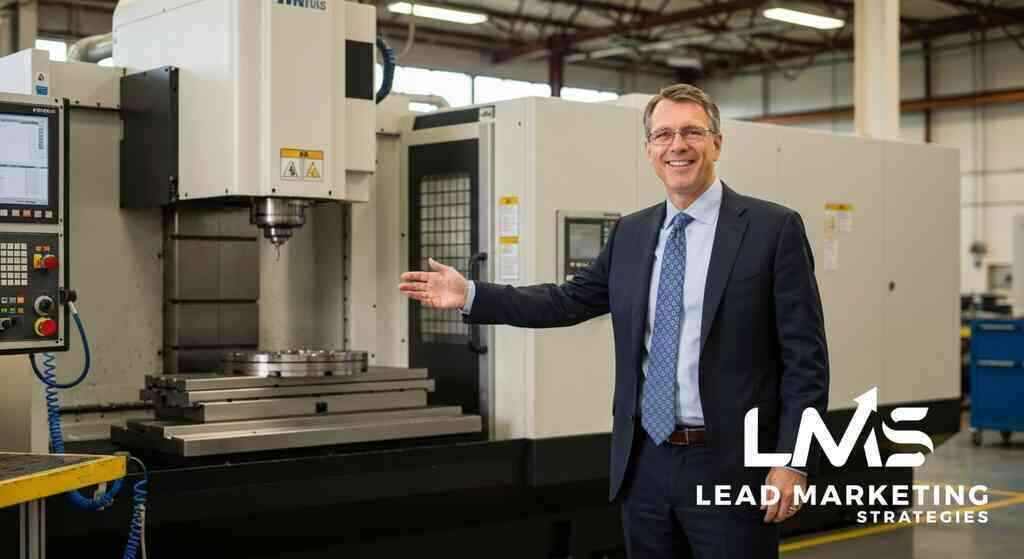
Your factory floor operations produce high-value goods, but your website should be producing high-value information. Bridging the gap between the shop floor and the screen requires a shift in how you document your capabilities and industrial processes. Potential partners want to see the precision, quality control, and scale of your facility through high-quality video and photography. When you showcase your actual manufacturing environment, you build trust and demonstrate operational readiness to sophisticated procurement managers. This visual transparency turns a static company page into a dynamic industrial digital marketing solution for manufacturers, proving your claims with hard evidence.
Furthermore, integrating your internal production capacity into your messaging helps potential clients understand exactly what you can deliver on short notice. Many manufacturers fail to broadcast their current capabilities, leading to lost contracts that they were actually well-equipped to fulfill. By documenting your specialized equipment and production workflows, you position your brand as a transparent partner that values accountability. Using B2B manufacturing growth tactics near Commack, you can align your online content with real-world output. This synergy creates a seamless narrative that connects your physical manufacturing prowess with the specific needs of digital prospects searching for reliable partners.
Defining the difference between vanity metrics and industrial ROI
It is easy for business owners to get caught up in tracking likes, impressions, and website visitors without considering their actual impact on the bottom line. These vanity metrics often provide a false sense of success while masking a lack of genuine industrial return on investment. For a manufacturing brand, success should be measured by the quality of the sales pipeline and the conversion of high-intent inquiries into long-term contracts. You must move beyond surface-level data to evaluate metrics that truly matter, such as lead-to-customer conversion rates and the total value of your digital marketing sales pipeline. Focusing on these deeper insights ensures that every marketing dollar contributes to actual business growth.
By utilizing measurable results guide with lead marketing strategies team, your business can filter out the noise and focus on actionable data that improves profitability. A comprehensive marketing strategy that emphasizes tangible outcomes allows you to see exactly which campaigns drive high-intent industrial leads. This approach moves you away from speculative spending and toward data-driven decisions that align with your specific manufacturing goals. When you understand the correlation between website engagement and factory throughput, you stop guessing and start scaling with precision. Data-driven growth is the ultimate equalizer that allows smaller firms to punch well above their weight class against larger industry incumbents.
Building a Digital Engine for Industrial Lead Generation
Architecting a high conversion website for technical buyers
Your website acts as the virtual showroom for your facility, and for many, it is the first point of contact for engineers and procurement agents. Technical buyers have little patience for bloated designs or slow loading speeds that hinder their ability to find specifications. Instead, they require a streamlined architecture that provides easy access to material data sheets, CAD files, and equipment performance standards. Implementing a clear, logical navigation structure helps these users find exactly what they need in seconds, directly increasing the likelihood of a conversion. Investing in professional web design solutions ensures that your digital platform reflects the same precision and quality that goes into your physical products.
Beyond basic functionality, your site must be optimized for search engine visibility to attract users who do not already know your brand name. This involves implementing structural changes that appeal to both human users and search engine crawlers, such as fast load times and mobile-responsive layouts. Effective manufacturing website conversion optimization means turning your site into a lead-capturing machine that speaks the language of your niche. By adding clear calls-to-action on product pages and offering downloadable resources, you can gather contact information from anonymous visitors. This strategy transforms passive traffic into a database of qualified prospects that you can engage with directly.
Targeting the right decision makers with precision PPC management
Precision in digital advertising is the cornerstone of successful industrial growth, especially when you are looking to reach decision-makers who have specific procurement needs. Generic ads often attract clicks from the wrong audiences, wasting your budget on low-value traffic that never enters your sales cycle. Instead, you should utilize platform targeting tools to reach individuals based on their professional titles, company size, and specific manufacturing industry interests. When you run high-intent manufacturing leads through PPC, you ensure that your ads appear exactly when a potential client is searching for solutions you provide. This targeted visibility minimizes wasted spend and maximizes the return on your advertising investment.
A sophisticated PPC strategy does not stop at keyword selection; it requires continuous monitoring and refinement of bidding strategies based on conversion quality. By tracking which specific ads generate leads that turn into closed contracts, you can double down on high-performing segments. This granular approach allows for constant optimization of your campaigns, ensuring that your manufacturing brand remains front-and-center for high-value prospects. Working with how lead marketing strategies boosts ROI with PPC, your firm can maintain a competitive edge in even the most crowded industrial markets. Precision PPC management transforms digital advertising from an expense into a reliable, high-yield investment.
Leveraging content marketing to establish manufacturing authority
Building authority in the manufacturing sector requires more than just listing services; it demands deep, technical knowledge that solves real industry problems. An effective industrial content marketing framework allows you to demonstrate your expertise through white papers, technical guides, and in-depth case studies. When you consistently publish high-quality content that addresses the challenges of engineers and project managers, you become a trusted thought leader in your space. This approach builds long-term organic search visibility and establishes a foundation of credibility that generic marketing efforts cannot replicate. By answering the most complex technical questions, you naturally attract the attention of high-value prospects.
Content marketing is not about creating fluff; it is about building a library of resources that serves as a secondary sales force for your firm. By providing answers before they are even asked, you shorten the sales cycle and improve the quality of inbound inquiries. Whether it is explaining the benefits of a new material or detailing the history of a specific manufacturing process, your content must provide genuine value. Utilizing best spring content marketing strategies for NY brands, you can stay relevant and maintain consistent interest from your target audience. This ongoing commitment to educational content keeps your brand top-of-mind whenever a procurement decision is being made.
Automating the B2B lead nurturing process for long sales cycles
The manufacturing sales process can often span months or even years, requiring persistent communication and a steady supply of helpful information. Automation tools allow you to stay in front of your prospects without placing an impossible burden on your internal sales team. By setting up automated email sequences triggered by user behavior, you can deliver tailored content based on where a prospect is in their research phase. This industrial marketing automation strategy ensures that no lead falls through the cracks and that every prospect receives timely, relevant information. Automation keeps your brand warm throughout the long decision-making process common in B2B manufacturing.
Nurturing leads effectively also requires segmenting your audience into distinct groups based on their technical needs and purchasing power. Once a prospect enters your system, you can use behavioral analytics to determine the best path forward for their specific interests. Providing B2B industrial lead nurturing in the USA allows you to build stronger relationships with leads who aren’t quite ready to buy but are actively researching. When the time comes for a final decision, your brand will be the first one they think of because of the consistent value you provided. Automating these touchpoints creates a predictable pipeline that scales with your business objectives.
Scaling Your Manufacturing Brand from Commack to the National Stage
Local SEO services as a foundation for national expansion
Local search engine optimization is the bedrock for any brand looking to expand, even when your manufacturing goal is national dominance. Establishing a strong footprint in your immediate region, such as Suffolk County and the greater New York area, builds the initial domain authority needed to rank for broader search terms. When you optimize your Google Business profile and target location-specific queries, you establish a reliable source of traffic and credibility. By leveraging SEO for industrial companies in New York, you ensure that your local presence is bulletproof before you take on national competitors. A solid local foundation provides the reputation and social proof required to compete on a wider scale.
Expanding beyond your home base requires a strategic approach to localizing your content for key industrial hubs across the country. You can create landing pages tailored to specific markets or regions, allowing you to capture localized demand while maintaining a unified national brand. This granular level of optimization helps you rank for “near me” searches from target prospects throughout the 50 states. Using effective search engine optimization methodologies, you can gradually broaden your reach while maintaining the high quality of your site’s authority. This systematic expansion strategy keeps your growth sustainable and grounded in proven search performance.
Aligning your marketing strategy with internal production capacity
Scaling your brand without matching your production capacity is a recipe for operational failure and unhappy clients. Your marketing strategy must be tightly integrated with your factory’s actual output capabilities to ensure that you are generating leads for the right types of work. If you are a specialist in custom fabrication, your advertising should specifically highlight your custom engineering capabilities rather than general mass production. This alignment ensures that the leads entering your pipeline are both qualified and feasible for your team to handle. By utilizing digital transformation for manufacturers on Long Island, you can better coordinate your online messaging with the realities of the shop floor.
Working with an agency that understands the nuance of production-led marketing allows you to scale at the right pace. If you are planning an equipment upgrade or a facility expansion, your marketing should ramp up in anticipation of that new capacity. This proactive synchronization prevents the common problem of being overwhelmed by demand that you cannot fulfill. Furthermore, it allows you to charge premium rates for the specialized work you are perfectly equipped to deliver. Aligning your external marketing strategy with your internal production heartbeat creates a balanced business model that can grow reliably over many years.
Measuring success through data driven manufacturing growth
The ability to measure and iterate is what separates average manufacturers from industry leaders who dominate their market segment. You must implement advanced analytics to track every touchpoint a prospect has with your brand, from the first search query to the final contract signature. By integrating tools like Google Analytics with your CRM, you gain full visibility into the cost-per-acquisition for different segments of your business. Understanding which channels, keywords, and content assets drive the most revenue allows you to optimize your strategy continuously. This comprehensive marketing strategy turns your marketing department into a profit center that actively contributes to your expansion goals.
When you have a clear picture of your ROI, you can make informed decisions about where to invest for the next quarter or the next year. You might find that your high-ticket industrial leads are coming from a specific LinkedIn campaign, prompting you to shift your budget away from lower-performing channels. Following the advice in how to create a 2026 digital marketing plan for Long Island, your business can stay ahead of changing market conditions. Data is not just for the tech sector; it is a vital requirement for any manufacturer that wants to remain competitive in a digital world. By prioritizing facts over intuition, you ensure that every step you take toward national scaling is a step in the right direction.
To truly understand why lead marketing strategies wins at B2B lead generation, look no further than our commitment to deep, industry-specific expertise. Our team is based right in the heart of Long Island, at the Northgate Shopping Center on Jericho Turnpike in Commack, and we apply that local attention to detail to every project regardless of geography. We handle everything from website architecture to PPC management, ensuring that your digital engine is fully tuned for maximum industrial performance. Connect with us on lead marketing strategies on LinkedIn to follow our latest insights or contact us directly to start your own growth initiative. Together, we can turn your digital presence into your most consistent and reliable source of new manufacturing business.
Frequently Asked Questions
What makes industrial manufacturing marketing different from B2C marketing?
Industrial manufacturing marketing involves longer sales cycles, multiple decision-makers, and a heavy emphasis on technical specifications. Unlike B2C marketing, which often relies on emotional appeal and impulse buys, manufacturing marketing must provide deep, educational content that satisfies the rigorous due diligence process of procurement teams and engineers.
How quickly can a manufacturer expect to see results from SEO?
SEO is a long-term investment that typically requires three to six months before significant movement in search rankings becomes apparent. Because manufacturing keywords are often highly niche, you may see faster traction in specific areas, but sustained growth in traffic and lead volume usually follows a consistent six-to-twelve-month content and technical optimization effort.
Is PPC advertising worth the investment for niche manufacturing companies?
Yes, PPC is highly effective for manufacturers because it allows you to capture high-intent leads who are actively searching for specific components or services. By using precise targeting, you can ensure your ads are shown only to individuals at relevant companies, making it a highly cost-efficient way to supplement your organic growth efforts.
How do I ensure my marketing leads are actually high-quality?
High-quality leads come from having clear, technical content that filters out prospects who are not a fit for your specific production capabilities. By including detailed specifications, project requirement forms, and qualification questions in your lead generation process, you can ensure that your sales team only interacts with decision-makers who have real, project-based needs.
Does my manufacturing business need to be on social media?
While manufacturing is not typically known for viral social media content, platforms like LinkedIn are essential for B2B brand authority and lead nurturing. Being active where your industry peers discuss innovations and trade news helps you build credibility, share thought leadership, and keep your brand in front of prospects during their long research phases.
This section should be wrapped in FAQPage schema.