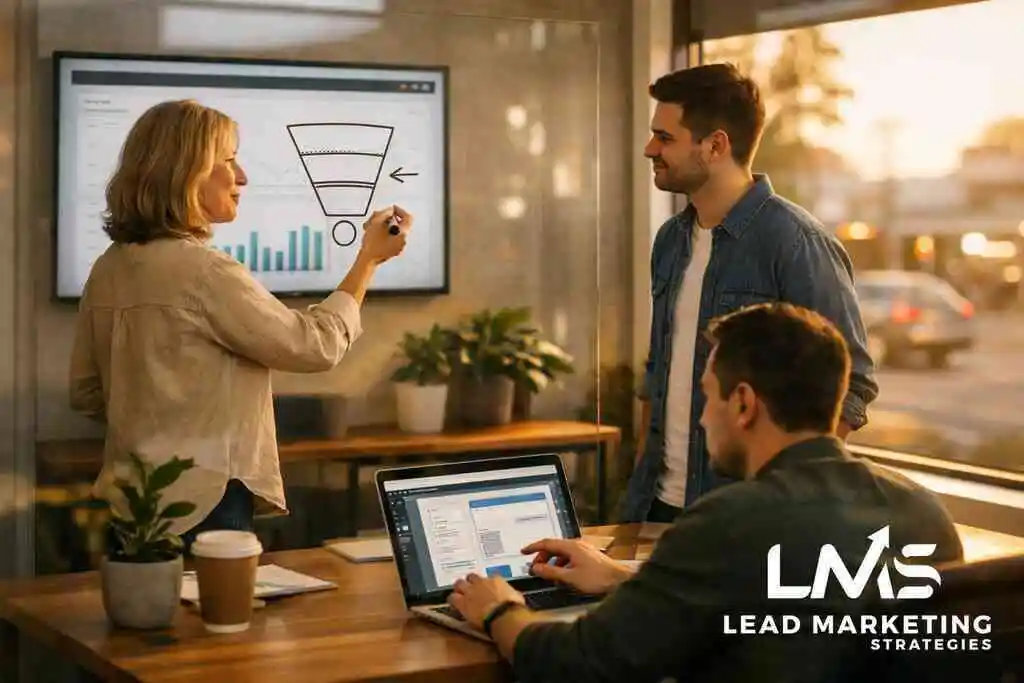
Why your ecommerce emails are quietly leaking revenue
Your traffic can rise while your inbox stays silent. That gap is painful, and it usually means money is slipping away between visits and purchases. We hear this from ecommerce owners all the time, especially when paid ads and social posts are working harder than email. If you are staring at decent store traffic but weak repeat sales, the frustration is real.
The shop looks busy but the inbox is doing nothing
A busy storefront does not mean your email marketing for ecommerce brands is earning its keep. Many stores collect addresses, send occasional blasts, and hope for sales. That is not a system. It is a pattern of missed moments. The real issue is often weak timing, weak segmentation, and weak follow-through after the first visit.
Here is the part most owners miss: email is not just a broadcast channel. It is a revenue system that should support ecommerce lead generation, customer retention strategies, and repeat purchase optimization. If you are relying on generic newsletters, you are leaving conversion optimization on the table. The inbox should help you move people through the customer journey, not just remind them you exist.
*”all-in-one digital marketing Services
save the time and efforts”*- Ahmed E., a 5 star review from Lead Marketing Strategies on Google Business Reviews
Which customer moments actually deserve an email
Not every click deserves a message. Some moments do. A first purchase, an abandoned cart, a browse with clear intent, and a post-purchase question all deserve attention. Those are the moments where lifecycle email marketing feels timely instead of intrusive. The best brands map these moments carefully.
One Commack retailer we spoke with had strong weekend traffic but almost no recovery after cart abandonment. Their issue was not demand. It was follow-up. Once the timing and message structure changed, the store finally started treating each shopping signal like a real sales opportunity.
Why broad blasts lose sales while segmented sends win
Broad blasts feel efficient, but they often underperform. A customer who bought running shoes last week does not need the same offer as someone who only browsed gifts. That is why email list segmentation and audience targeting for ecommerce matter so much. Segmented sends respect intent, and intent drives clicks.
According to marketing strategy principles, relevance beats volume almost every time. That is true in email too. Segmentation based on purchase behavior lets you tailor offers, timing, and copy. It also helps ecommerce email automation feel natural, because the message matches the stage of the buyer. In practice, that means better open rate improvement, stronger click-through rate optimization, and fewer unsubscribes.
The hidden cost of ignoring mobile first email design
Most people open email on a phone. That is the reality. If your layout is cramped, your buttons are tiny, or your copy blocks feel endless, people bail fast. mobile-optimized email design is not a nice extra. It is a conversion requirement.
We have seen campaigns with decent subject lines lose momentum the moment the email opened on mobile. The headline wrapped badly. The product image loaded awkwardly. The button sat too low. That is where design quietly kills revenue, especially for ecommerce marketing strategy teams that already spent money on acquisition. A strong inbox message should feel easy to scan, easy to trust, and easy to act on.
The automation map that turns casual shoppers into repeat buyers
Automation is where email starts acting like a sales rep that never sleeps. It does not replace strategy. It amplifies it. The stores that win use marketing automation workflows to guide people from curious visitor to repeat customer without sounding robotic. That requires pacing, relevance, and restraint.
How to build a welcome email series that earns the next click
A welcome email series should do more than say hello. It should set expectations, reinforce brand awareness, and give a simple path forward. If someone signs up, your first message should reward that action quickly. Then the next emails can explain your best categories, social proof, and a clear reason to return. That is where personalized email campaigns for ecommerce start paying off.
The strongest welcome flows usually answer three questions fast: What do you sell? Why should I care? What should I do next? Keep the tone direct. Keep the offer clear. And keep the sequence short enough that people do not feel trapped in a long pitch.
Abandoned cart email sequences that recover sales without sounding desperate
Abandoned cart email sequences work best when they feel helpful. You are not begging. You are removing friction. A simple reminder, a product image, and one gentle objection handler often outperform long emotional copy. That is especially true when shoppers were already close to buying. The point is to recover attention, not pressure the decision.
For many stores, abandoned cart email sequences and lifecycle email marketing should include a short series. The first message can be a clean reminder. The second can address hesitation, shipping, or trust concerns. The third can add urgency only if it feels honest. This is where conversion optimization for ecommerce emails matters more than clever writing. People buy when the next step feels safe.
Browse abandonment and post-purchase follow-up that keep momentum alive
Browse abandonment emails are useful when the visitor showed clear interest but left before adding to cart. They work because they reconnect interest with timing. Post-purchase email follow-up works for a different reason. It protects the relationship after the sale and reduces buyer anxiety. Both are part of smart lifecycle email marketing.
A Suffolk County boutique we reviewed had strong product pages but weak post-sale communication. Customers were left guessing about care instructions and next steps. Once the follow-up sequence changed, support questions dropped and repeat visits improved. The lesson is simple: momentum dies when communication stops.
What segmentation based on purchase behavior should look like
Segmentation based on purchase behavior should be specific enough to matter. Group customers by product type, order frequency, average order value, and time since last purchase. That gives you a much better base for audience targeting for ecommerce. It also supports customer lifetime value marketing, because your messages can reflect buying patterns instead of assumptions. 
A practical segmentation model often includes:
- First-time buyers
- Repeat buyers
- High-value customers
- Category-specific shoppers
- Lapsed customers
- Promo-only buyers
Each group needs a different message. That is the heart of email list segmentation and audience targeting for ecommerce. If you send the same offer to everyone, the message gets blurry. If you split by behavior, the message gets sharper.
When product recommendation emails and cross-sell offers feel helpful instead of pushy
Product recommendation emails work when they match the original purchase. A coffee grinder buyer might appreciate beans, filters, or a storage accessory. That feels useful. Random upsells do not. Cross-sell and upsell emails should support the original decision, not hijack it. That difference matters more than most brands realize. Here is what almost no online guide mentions: the best recommendation emails often use restraint. One strong suggestion can outperform six scattered ones. If your content marketing and link building and product feed are aligned, you can build dynamic content in emails that feels personal without becoming creepy. The goal is relevance, not volume. ### Where loyalty email campaigns and win-back email campaigns fit in the lifecycle
Loyalty email campaigns belong after the second purchase, not before trust exists. Win-back email campaigns belong when customer activity starts fading. If you send them too soon, you sound impatient. If you send them too late, the buyer relationship goes cold. Timing is everything here.
Think of the lifecycle in layers: new subscriber, first buyer, repeat buyer, at-risk buyer, lapsed customer. Each stage needs a different message and offer. That is where email campaign performance metrics and lifecycle email marketing help you decide what belongs where. When done well, loyalty email campaigns protect repeat purchase optimization, while win-back campaigns recover customers who simply drifted away.
What a high converting ecommerce email system needs before you scale
Before you scale email, make sure the foundation holds. Deliverability, list quality, testing, and tracking all have to work together. If one piece breaks, the whole system underperforms. Scaling a weak setup just makes the mistakes bigger.
Audience targeting for ecommerce and list growth strategies that protect deliverability
List growth strategies should attract people who actually want to hear from you. That means using forms, pop-ups, and offers that fit the buying context. It also means avoiding junk leads that never engage. Good list growth protects deliverability, which protects every future send. That is why ecommerce email automation should start with quality, not sheer size.
Deliverability best practices matter because inbox providers watch engagement closely. If people ignore you, future messages can land in spam or promotions. Keep your list clean. Remove inactive contacts. Use clear consent language. And stay compliant with GDPR and CAN-SPAM email compliance rules. The list is an asset only if it stays healthy.
A/B testing email subject lines and email copywriting for ecommerce that lift engagement
A/B testing email subject lines is one of the fastest ways to improve performance. Test one variable at a time: subject line, preview text, CTA, or offer framing. Then read the results carefully. The goal is not just open rate improvement. It is meaningful engagement that leads to sales.
Strong email copywriting for ecommerce should be plain, specific, and easy to scan. Short sentences help. So do concrete benefits and clear buttons. If your message sounds like a brochure, it will underperform. The best copy sounds like a helpful salesperson who respects the reader’s time. That is especially true for conversion optimization for ecommerce emails, where every line has a job.
Marketing automation workflows, dynamic content in emails, and SMS and email integration
Marketing automation workflows let you respond to behavior without manual strain. Dynamic content in emails makes those responses more relevant. SMS and email integration adds another layer when timing matters. Together, they create a stronger omnichannel marketing strategy. That can support both B2C lead generation and B2B marketing, depending on the store.
A practical workflow might send an email first, then a text only if the action is urgent and expected. That works well for shipping alerts, flash promos, and cart reminders. But keep the experience respectful. The wrong cadence can feel pushy fast. A thoughtful system treats each channel like part of the same conversation.
ROI tracking for email campaigns through ecommerce marketing analytics and revenue attribution
If you cannot measure it, you cannot improve it. ROI tracking for email campaigns should tie opens, clicks, conversions, and revenue together. Ecommerce marketing analytics should also show assist value, not just last click. That is where revenue attribution in email marketing becomes essential. It helps you see what email really contributes.
We use a simple rule on projects: if a campaign cannot be explained in numbers, it cannot be scaled confidently. Tools like GA4, campaign reports, and revenue attribution models help you connect effort to outcome. That matters for national marketing agency planning as much as it does for a local store in Commack. Strong reporting gives you the confidence to invest where the returns are clearer.
Promotional email campaigns, holiday email marketing, and customer re-engagement emails without training people to ignore you
Promotional email campaigns still work, but only when they are paced wisely. Holiday email marketing can be powerful because buyer intent rises naturally. The problem comes when every message becomes a sale. Then customers learn to wait for discounts. That is a hard habit to break.
Re-engagement emails should feel like a check-in, not a guilt trip. Ask whether the person still wants your content. Offer a simple preference update. Then move inactive subscribers out if they do not respond. That protects deliverability and keeps your list honest. Smart promotional email campaigns support long-term brand awareness through email without teaching people to ignore you.
How to connect email marketing with broader ecommerce marketing strategy, conversion optimization, and brand awareness
Email should not sit alone. It should connect with ecommerce marketing strategy, SEO services, social media marketing, and website development. If your product pages are weak, email can only do so much. If your social ads are strong but your landing pages confuse people, your email traffic will still leak. The message has to match the experience.
This is where a digital marketing agency with ecommerce marketing strategy experience can help align the pieces. From a Long Island marketing agency perspective, the best results usually come when email, SEO, and paid traffic support each other. A Commack marketing agency that understands lead generation, web design company priorities, and Google Ads management can look at the full path. That is the difference between random campaigns and a real marketing strategy.
The decision frame for choosing your next move, whether that is a cleanup, a rebuild, or a full-service partner
You do not need to fix everything at once. Start by asking three questions: Is the list clean? Are the automations relevant? Are the emails mobile-friendly and measurable? If the answer is mostly no, you probably need a rebuild. If the setup is decent but messy, a cleanup may be enough.
For many brands, the best next move is to work with a digital marketing consultant who can connect email, PPC management, SEO, and content marketing into one plan. Lead Marketing Strategies, based in Commack at Northgate Shopping Center off Jericho Turnpike, supports businesses across Suffolk County, Long Island, New York, and all 50 states. If your email channel feels busy but underpowered, bring one campaign, one list segment, and one goal to the table. You do not have to solve it all today, but you can start with a smarter plan today.
Frequently Asked Questions
Question: How can Lead Marketing Strategies help ecommerce brands build scalable email marketing systems that improve customer retention strategies and repeat purchase optimization?
Answer: Lead Marketing Strategies helps ecommerce brands turn email marketing for ecommerce into a structured revenue channel instead of a series of random sends. That starts with mapping the customer journey, identifying the most valuable touchpoints, and building marketing automation workflows that match buyer behavior. We focus on email list segmentation, audience targeting for ecommerce, and lifecycle email marketing so each message feels relevant to where the customer is in the buying cycle.
A strong system usually includes welcome email series, abandoned cart email sequences, browse abandonment emails, post-purchase email follow-up, customer re-engagement emails, and win-back email campaigns. When those flows are built correctly, they support customer retention strategies, customer lifetime value marketing, and repeat purchase optimization without making the inbox feel crowded. We also look at revenue attribution in email marketing and email marketing analytics so you can understand what is actually contributing to sales.
If your current setup is mostly one-size-fits-all promotional email campaigns, we can help you move toward a more scalable email marketing system that supports brand awareness through email and stronger conversion optimization. For ecommerce brands, that often means pairing email with ecommerce marketing strategy, content marketing, and even SMS and email integration when it makes sense.
Question: What does a high-performing welcome email series and abandoned cart email sequences strategy look like for ecommerce email automation?
Answer: A high-performing welcome email series should do more than say thank you for subscribing. It should set expectations, introduce the brand, highlight your best categories or offers, and guide the subscriber toward the next click. For ecommerce email automation, that first impression matters because it shapes how customers respond to future messages. At Lead Marketing Strategies, we build welcome flows that are clear, concise, and aligned with your ecommerce marketing strategy.
Abandoned cart email sequences are just as important. They work best when they are helpful, not pushy. The first email usually serves as a reminder. The next message can address common concerns like shipping, returns, or trust. If needed, a third message can add urgency in a way that still feels authentic. This approach supports conversion optimization while respecting the customer’s decision-making process.
We also evaluate whether dynamic content in emails, product recommendation emails, or cross-sell and upsell emails can improve the flow. Combined with audience targeting for ecommerce and segmentation based on purchase behavior, these automations can become part of a much stronger lifecycle email marketing program. The goal is always the same: reduce friction, increase relevance, and drive more qualified sales.
Question: How do SEO services, social media marketing, and email marketing work together in the Ultimate Guide to Email Marketing for Ecommerce Brands 2026 approach?
Answer: Email should never live in a silo. The best results usually come when SEO services, social media marketing, web design company support, and email marketing all reinforce the same message. For example, if someone discovers your brand through New York SEO or local SEO services, email can keep that interest alive after the first visit. If a shopper clicks from Facebook advertising or social media strategy content, email can continue the conversation with personalized email campaigns that fit their intent.
At Lead Marketing Strategies, we look at the bigger picture. That means connecting email marketing for ecommerce with website development, conversion optimization, and marketing strategy so the experience feels consistent from first click to final purchase. If your landing pages, product pages, and mobile-optimized email design are all aligned, your chances of engagement improve significantly.
This is especially important for ecommerce marketing, B2C lead generation, and even B2B marketing when the buyer journey is longer. Our role as a digital marketing agency and Long Island marketing agency is to help businesses build a full-funnel system, not just send more emails. That can include content strategy services, Google Ads management, PPC management, and email campaign performance metrics that show how each channel supports the others.
Question: What email deliverability best practices and GDPR and CAN-SPAM email compliance steps should ecommerce brands follow before scaling list growth strategies?
Answer: Before scaling, ecommerce brands need to protect deliverability and compliance. If your list is unhealthy or your messaging is too aggressive, even strong offers can get buried. Lead Marketing Strategies helps brands build list growth strategies that focus on quality contacts, clear consent, and engagement-first messaging. That means using forms and lead capture methods that fit the buying context instead of chasing volume for its own sake.
Email deliverability best practices include cleaning inactive subscribers, keeping complaint rates low, sending relevant content, and avoiding confusing subject lines that hurt trust. On the compliance side, GDPR and CAN-SPAM email compliance are non-negotiable. Your subscribers should know what they are signing up for, how to opt out, and what kind of communication to expect. That protects both your list and your brand reputation.
We also recommend A/B testing email subject lines, reviewing open rate improvement trends, and using email marketing analytics to see whether your audience targeting for ecommerce is actually working. When your list is healthy and your messaging is consistent, your promotional email campaigns, holiday email marketing, and customer re-engagement emails perform better over time. That is how a digital marketing consultant or national marketing agency can help turn email into a reliable channel instead of a deliverability risk.
Question: How can Lead Marketing Strategies support local and national brands with email marketing for ecommerce, website development, and digital advertising?
Answer: Lead Marketing Strategies supports brands that need a practical, integrated approach to growth. For local businesses in Suffolk County, Long Island, and Commack, that can mean aligning email marketing for ecommerce with Commack SEO, Long Island web design, and local SEO services to help generate leads online and improve conversion optimization. For larger brands, the same approach can scale across multiple markets as part of a broader national marketing agency strategy.
Because we also offer website development, website design, PPC management, and digital advertising support, we can help make sure the email experience matches the rest of the funnel. That matters for ecommerce lead generation, small business marketing, and affordable marketing services alike. If your emails are strong but the website is weak, results will suffer. If the website is great but the email follow-up is missing, revenue still leaks away.
Our goal is to help businesses build smarter marketing systems with better audience targeting, stronger brand awareness, and more measurable ROI tracking for email campaigns. Whether you need help with high-converting email templates, customer journey mapping, email copywriting for ecommerce, or a full marketing automation plan, we can help you identify the right next step and build from there. In short, we bring together email, SEO services, social media marketing, and ecommerce marketing strategy so every channel works harder for the business.