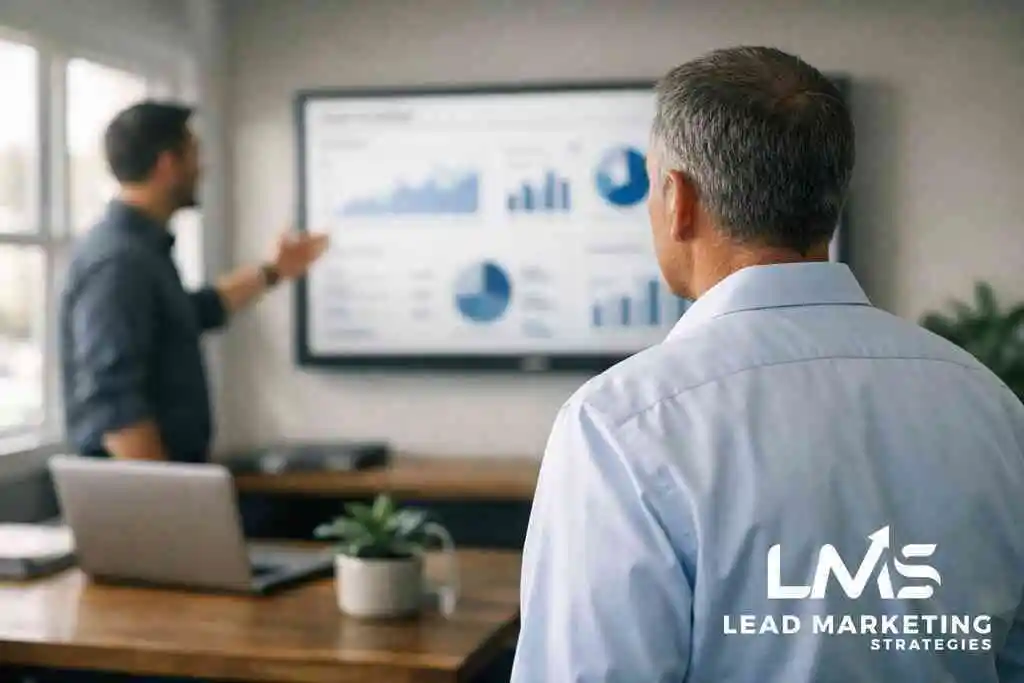
Why your leads go cold when your marketing still depends on manual follow-up
Your website traffic is up, but leads are not turning into calls. That gap hurts because every missed response feels like money slipping through your fingers. We hear this from business owners all the time, especially when the inbox is busy and the day gets away from them. If you are reading this after a form submission sat untouched overnight, that frustration is real.
The hidden cost of slow responses in lead generation and B2B lead generation
Speed matters more than most people realize. In lead generation and B2B lead generation, a prospect often contacts three or four companies at once. If your reply comes hours later, the conversation may already belong to someone else. That is not about effort; it is about timing.
A strong marketing automation in 2026 setup reduces that delay with automated follow-up campaigns, lead scoring, and simple handoff rules. It also gives your team breathing room. Instead of chasing every form fill manually, you can focus on qualified conversations and better sales funnel automation. That shift is especially helpful for a small business marketing team that wears too many hats.
One local contractor we spoke with in Suffolk County had a simple problem. Their leads were coming in from PPC management, but half the inquiries sat unanswered until the next morning. After that, their pipeline looked much healthier, not because the ads changed, but because the response system did. The work got lighter. The leads got warmer.
Why email marketing automation and CRM integration change the customer journey
This part is genuinely confusing for most owners at first. Email marketing automation sounds technical, but the idea is simple. You set rules that respond to what a person does, then your CRM keeps the conversation organized. That is how customer journey mapping stops being a whiteboard exercise and becomes something useful.
When email marketing automation and CRM integration work together, every click tells a story. A prospect downloads a guide, visits a pricing page, or returns through a remarketing ad. Each action can trigger a different message, which makes your marketing feel more personal without requiring manual labor. That is the heart of lifecycle marketing.
The best systems also support nurture campaigns and customer journey mapping. They keep your brand present without becoming annoying. Here is the part most business owners miss: good automation does not blast everyone with the same message. It lets you speak to the right person at the right moment, which improves trust and conversion optimization.
What Long Island marketing agency owners see when audience targeting is too broad
Broad targeting wastes money fast. A Long Island marketing agency sees this every week in social media marketing, Facebook advertising, and Google Ads management. If your audience is too wide, your message becomes vague. If your message becomes vague, your cost per lead usually climbs.
That is why audience targeting has to reflect the buyer’s real stage. Someone searching for local SEO services in Commack is not the same as a CFO comparing national marketing agency partners. They need different pages, different offers, and different proof. That is where omnichannel marketing and campaign personalization make a visible difference.
“Good and useful for all of people that needs some advice and strategies for better marketing.” – Saeed R., 5-star review from Lead Marketing Strategies on Google Business Reviews.
On the projects we’ve finished this year, the strongest results usually came from tighter audience segmentation, not louder ads. A Commack marketing agency off Jericho Turnpike can tell you this plainly: precision beats volume. That applies whether you run ecommerce marketing, B2B marketing, or B2C lead generation. It also applies to the way your team spends its time.
What smart marketing automation actually does for a small business before the first sale
Before a sale happens, prospects are deciding whether to trust you. That decision happens in small moments: a helpful email, a clear landing page, a follow-up that arrives while interest is still warm. Smart automation supports those moments without making the experience feel robotic.
How lifecycle marketing and nurture campaigns move prospects through the funnel
Lifecycle marketing works because people do not buy all at once. They move from awareness to interest, then to comparison, then to action. Nurture campaigns meet them where they are, which is why they matter so much in content marketing and lead generation for small business. You are not pushing harder; you are guiding better.
For example, someone who finds you through New York SEO content may not be ready to book immediately. A practical sequence can educate them, show social proof, and invite a consultation when timing is right. That sequence might include a blog, an FAQ, a case study, and a simple call to action. It is quiet, but it works.
A good marketing strategy uses this rhythm across channels. Search engine optimization company work, social media strategy, and email marketing strategy should all support the same journey. When they do, your brand awareness grows naturally. The prospect sees consistency, and consistency builds confidence.
Why conversion optimization gets easier when behavioral segmentation is doing the heavy lifting
Behavioral segmentation turns generic traffic into useful insight. Instead of guessing what people want, you watch what they do. Did they read about website design trends 2025? Did they return to the contact page? Did they click a PPC offer after reading a blog about affordable marketing services? Those signals matter.
That is where conversion optimization for lead funnels becomes easier to manage. You are no longer optimizing a page in the dark. You are adjusting based on behavior, which is far more reliable than opinion. This helps with conversion-focused web design, lead scoring, and personalized marketing campaigns with behavioral segmentation.
Here is a simple way to think about it:
- Broad traffic tells you people visited.
- Segmented traffic tells you what they wanted.
- Behavioral data tells you what to fix next.
That framework fits small business marketing and ecommerce marketing alike. It also supports B2B lead generation, where longer decision cycles make every click more valuable. The better your segmentation, the less your team has to guess.
Where marketing analytics and ROI tracking show whether the machine is working
Marketing automation only matters if it can be measured. That is why marketing analytics and ROI tracking should sit at the center of your system, not as an afterthought. Google Analytics 4, CRM reports, and ad platform data should all point in the same direction. If they do not, the machine is hiding problems instead of solving them. 
This is also where many owners get stuck. They can see clicks, but not quality. They can see opens, but not revenue. Strong reporting connects the whole picture. It shows which content strategy services bring the best leads, which campaigns generate calls, and which offers stall halfway through the funnel.
We often tell clients that data should answer three questions:
- What brought the lead in?
- What moved them forward?
- What caused the sale or the drop-off?
That is practical, not flashy. It also aligns with SMART goals and the kind of data-driven marketing that keeps a team honest. If you want marketing analytics and ROI tracking to mean something, the reports must tie back to business outcomes.
The 2026 decision frame Lead Marketing Strategies uses to choose what gets automated next
Not every task deserves automation. Some things need judgment, not software. Others are repetitive, predictable, and ideal for a system. The challenge is knowing which is which, especially when you are balancing SEO services, PPC management, social media marketing, and website development at once.
Which workflows deserve automation first for SEO services, PPC management, and social media marketing
The best starting point is usually the work that repeats every week. That often includes lead routing, reminder emails, reporting, and follow-up. For a search engine optimization company, it can also include rank tracking summaries, content reminders, and internal task alerts. Those tasks are ideal because they save time without hurting quality.
For PPC management and Google Ads management, automation can support budget alerts, ad performance summaries, and intake forms. For social media marketing, it can help schedule posts and trigger follow-up when someone engages with a campaign. The goal is not to remove humans. It is to keep humans focused on strategy, copy, and decisions.
If you are comparing priorities, this table helps:
WorkflowBest use of automationWhy it mattersSEO reportingWeekly summaries and alertsSaves time and improves consistencyPPC follow-upLead routing and response triggersReduces lag after ad clicksSocial postingScheduling and engagement alertsKeeps presence steadyEmail nurtureSegmented sequencesImproves response qualityFor audience targeting with social media marketing, automation works best when it supports human review. That balance keeps campaigns sharp. It also helps with audience segmentation and brand awareness.
How local SEO services, web design company work, and website development fit into one system
Local SEO services do not live by themselves. They connect to the website, the forms, the tracking, and the follow-up. A web design company that understands this can build pages that convert traffic, not just display it. Website development then becomes the infrastructure that makes tracking and automation possible.
A common mistake is separating design from lead capture. A beautiful page with a weak form is still weak. A fast page with no CRM integration also leaves value on the table. That is why lead generation for small business should be treated as a system, not a single campaign.
From our office off Jericho Turnpike in Commack, we see this pattern often with Suffolk County marketing clients. They need local SEO services, but they also need conversion-focused web design and a clean path from click to contact. If one piece fails, the whole funnel feels slower than it should. That is true for Long Island web design, Commack SEO, and New York SEO alike.
What a Commack marketing agency off Jericho Turnpike should ask before building personalized marketing campaigns
Before building personalized marketing campaigns, ask five blunt questions. What action matters most? What data do we actually have? Which leads should get immediate attention? Which messages should wait? And who owns the handoff when a lead becomes sales-ready?
A good digital marketing agency on Long Island does not start with tools. It starts with structure. That means mapping the customer journey, defining lead scoring rules, and choosing where personalization will help rather than distract. It also means being realistic about your capacity.
The mistake we see most often is automating too early. Owners buy software before they clarify the offer, the audience, or the next step. That creates noise, not momentum. A better move is to define the marketing strategy first, then automate the parts that will actually improve speed, consistency, and ROI tracking.
When to pair marketing automation with content marketing, Google Ads management, and Facebook advertising
Automation works best when it supports distribution. Content marketing brings people in. Google Ads management and Facebook advertising create demand. Marketing automation then turns attention into action. That sequence is simple, but it is easy to break when each channel operates on its own.
A practical example helps. Someone clicks a Google ad about how to generate leads online with PPC and SEO and lands on a service page. If they do not convert, an automated email can deliver more detail. If they engage again, a sales rep can step in. That is multichannel lead nurturing with purpose.
The same logic works for Facebook advertising and content strategy services. The content builds trust, the ad creates the touchpoint, and the automation keeps the conversation alive. That is how modern lead generation feels coordinated instead of scattered. It also helps a national marketing agency serve clients in all 50 states without losing the local detail that makes campaigns work.
Why the next move is not more software but a clearer marketing strategy for Long Island, New York, and the 50 states
More software will not fix a fuzzy offer. It will only make the confusion move faster. The real win comes from a clearer marketing strategy, one that ties search engine optimization, PPC management, social media strategy, and email marketing strategy into one path. That path should fit your audience, your budget, and your sales process.
If you are running a Commack marketing agency search, or comparing affordable marketing services across Long Island marketing agency options, look for clarity before features. Ask how the team handles conversion optimization, customer retention marketing, and reporting. Ask how they support SMBs, ecommerce marketing, and B2B marketing without forcing the same template on everyone.
Lead Marketing Strategies builds around that kind of thinking. As a Long Island marketing agency in New York, we work from Commack to clients across the country, and the same principle always holds: automation should make your system smarter, not busier. If you want a practical next move, review one workflow this week, choose the slowest handoff, and fix that before adding anything else. You do not have to solve everything today, and you do not have to do it alone.
Frequently Asked Questions
Question: What makes marketing automation such an important part of the marketing strategy in Why Lead Marketing Strategies Recommends Marketing Automation in 2026?
Answer: Marketing automation matters because it helps businesses respond faster, stay organized, and keep leads moving through the funnel without relying on constant manual follow-up. For a digital marketing agency like Lead Marketing Strategies, that means combining lead generation, CRM integration, lead scoring, and automated follow-up campaigns into one system that supports conversion optimization. When someone fills out a form, downloads content, or clicks a PPC ad, automation helps the right message reach them at the right time. That is especially valuable for small business marketing, B2B marketing, ecommerce marketing, and B2C lead generation, where timing and consistency can make a big difference. Instead of guessing what to do next, the team can use marketing analytics and ROI tracking to see which actions move prospects forward and which ones need adjustment. The result is a more efficient process that supports brand awareness, customer journey mapping, and better sales funnel automation.
Question: How does Lead Marketing Strategies use email marketing automation and CRM integration to improve lead generation for Long Island and Suffolk County businesses?
Answer: Email marketing automation and CRM integration work together to keep communication timely and relevant. When a prospect takes an action, such as visiting a service page, submitting a contact form, or engaging with content marketing, the CRM helps organize that data while automation sends the next message based on behavior. This approach supports lifecycle marketing, nurture campaigns, and personalized marketing campaigns without adding more manual work for the business owner or sales team. For a Long Island marketing agency serving Commack, Suffolk County marketing clients, and businesses across New York and all 50 states, this kind of structure is especially useful because it helps turn interest into qualified conversations. It also supports marketing automation for small business by making follow-up more consistent and reducing the chance that leads go cold. Lead Marketing Strategies focuses on building systems that are practical, measurable, and aligned with the client’s marketing strategy, whether the goal is more calls, more form fills, or stronger customer retention marketing.
Question: How do SEO services, PPC management, and social media marketing fit into marketing automation for a Commack marketing agency?
Answer: SEO services, PPC management, and social media marketing all benefit when they are connected through a clear automation system. A search engine optimization company can use automation for reporting, alerts, and follow-up tasks, while Google Ads management and Facebook advertising can trigger lead routing, reminder emails, and response workflows when a prospect engages with an ad. Social media strategy also becomes more effective when automation helps with scheduling, monitoring engagement, and sending leads to the right place quickly. At Lead Marketing Strategies, the goal is not to replace the human side of marketing; it is to remove repetitive tasks so the team can focus on strategy, content strategy services, and conversion-focused web design. That matters for businesses looking for affordable marketing services, because every channel should work together instead of operating separately. For companies searching for a Commack SEO partner, a Long Island web design team, or a marketing agency New York businesses can trust, this integrated approach helps create a smoother path from first click to final conversion.
Question: Why is customer journey mapping important for conversion optimization and audience targeting?
Answer: Customer journey mapping helps businesses understand how people move from first awareness to final action. Without it, audience targeting often stays too broad, and broad targeting usually leads to weaker results. With behavioral segmentation, marketers can see what a prospect clicked, viewed, downloaded, or revisited, then tailor the next step accordingly. That is where conversion optimization becomes much more effective. Instead of changing pages based on guesswork, the team can use marketing analytics, ROI tracking, and behavioral data to improve what actually matters. This is useful for lead generation, content marketing, ecommerce marketing, and B2B lead generation because different audiences need different messages. Lead Marketing Strategies uses this approach to support omnichannel marketing, campaign personalization, and multi-channel lead nurturing so the customer experience feels consistent across email, social media, search, and paid ads. For businesses comparing a digital marketing consultant or a national marketing agency, this kind of clarity is often what turns traffic into qualified leads.
Question: How can Lead Marketing Strategies help businesses that want how to generate leads online through marketing automation, web design company services, and website development?
Answer: Generating leads online usually starts with a strong foundation: the right marketing strategy, a site that supports conversion-focused web design, and follow-up systems that do not let interest fade. Lead Marketing Strategies combines website development, local SEO services, PPC management, content marketing, and marketing automation so businesses can create a more complete lead generation system. A site should do more than look good; it should support lead capture, CRM integration, and clear calls to action. When that structure is in place, automated follow-up campaigns, lead scoring, and email marketing strategy can keep the conversation moving. This is especially helpful for small business marketing, affordable marketing services, and marketing strategies for small business because it helps owners get more value from the traffic they already have. Whether a company needs support with New York SEO, Commack marketing agency services, Long Island marketing agency planning, or marketing services all 50 states, Lead Marketing Strategies builds around the idea that automation should make the entire process smarter, faster, and easier to measure.