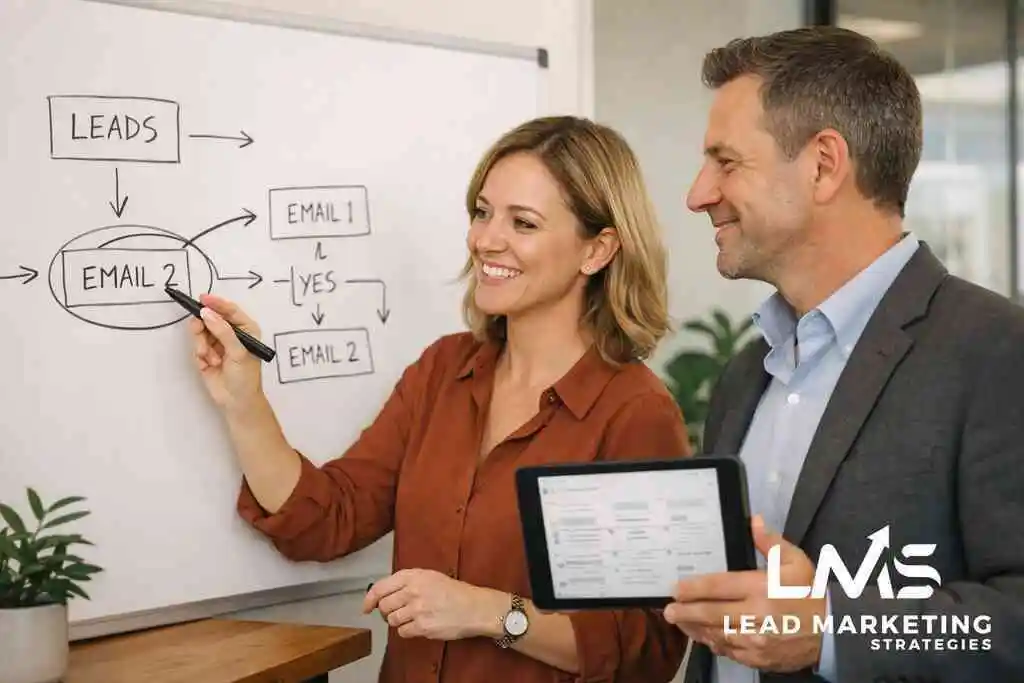
Why New York leads ignore plain-email blasts but respond to smart automation
You can send a polished email blast and still hear nothing back. That silence stings, especially when the lead seemed warm just minutes earlier. If you are checking replies after hours and wondering what went wrong, the problem is usually not volume. It is relevance, timing, and follow-up discipline.
The local inbox problem most Commack and Long Island businesses miss
New York inboxes are crowded, and Long Island inboxes are no exception. A lead in Commack may be comparing three service providers while answering work emails, school messages, and vendor follow-ups. That means your message has to earn attention fast. Plain blasts rarely do that because they treat every contact like the same person.
We see this pattern often with email marketing automation for New York leads. A local business sends one generic promotion, then wonders why the click rate stays flat. The better approach is to match the message to the moment. On Jericho Turnpike, where businesses compete for the same attention, timing can matter as much as offer quality.
Here is the part most owners miss. A lead who downloaded a guide, visited your pricing page, or clicked a service email is signaling intent. That signal should trigger a response, not another random newsletter. Smart automation reads that behavior and acts on it. That is how you move from “maybe later” to “let’s talk.”
Why audience segmentation beats one-size-fits-all sends in crowded New York markets
Segmentation is the difference between shouting and speaking directly. In crowded New York markets, one-size-fits-all sends blur together fast. A homeowner, an ecommerce buyer, and a B2B decision-maker do not want the same message. They also do not move through a sales cycle at the same speed.
A practical marketing automation strategy in New York starts with separate paths for separate needs. That might mean one sequence for SEO services, another for web design leads, and another for PPC management inquiries. It also means adjusting tone by location and intent. You should not email a Suffolk County buyer the same way you email a national prospect.
The mistake we see most often is over-mailing people who are only mildly interested. They never asked for a daily pitch. They asked for information. Respect that, and your brand awareness grows while your unsubscribe rate stays healthier.
How behavior-based triggers change the odds of getting a reply or booking
Behavior-based triggers are simple in concept and powerful in practice. If someone opens three emails, clicks a service page, or starts a form, the system should react. That reaction can be a reminder, a helpful resource, or a booking prompt. It should feel timely, not pushy.
A Commack retailer we worked with had steady traffic but weak inquiry follow-through. Once the team used behavioral triggers tied to page visits and form starts, replies became more intentional. The message changed from “Are you interested?” to “You were comparing options, so here is the detail that helps.” That small shift made the conversation feel easier for the prospect.
This is where behavior-based email triggers for service businesses help most. They support lead nurturing workflows without making every contact feel automated. When the trigger matches the action, the email feels useful. That is what improves booking odds.
The audience map that turns clicks into qualified leads
Clicks are not leads until you understand what they mean. A click on a blog post, a pricing page visit, and a demo request all carry different weight. Smart marketers map those signals into clear segments. That is where lead qualification starts.
Which first-party data matters most for lead nurturing workflows
First-party data is the information people give you directly. It includes form fills, email engagement metrics, page views, product interests, and service selections. It is cleaner than borrowed data because it comes from real interactions with your brand. It also gives you better control over customer lifecycle marketing.
For lead nurturing workflows for local leads on Long Island, the most useful fields are often the simplest. Name, company, service need, ZIP code, and contact preference can tell you a lot. Add behavior like clicks and page depth, and you can guide follow-up more intelligently. You do not need a massive database to make this work.
A useful rule is to collect only what you will actually use. Too many fields slow conversions. Too few fields leave you guessing. The sweet spot is enough data to personalize without making the form feel like homework.
How to segment New York audiences by service need, location, and intent
Segmentation works best when it reflects real buying differences. Someone looking for local SEO services in Suffolk County needs different education than a B2B buyer seeking pipeline acceleration. Someone comparing ecommerce marketing options may need abandoned cart recovery details. Someone exploring website development trends for 2026 may need reassurance about process and usability.
A strong segmentation plan for New York audiences usually breaks contacts into three layers:
- Service need: SEO, social media marketing, website development, PPC management, or content marketing.
- Location: Commack, Long Island, Suffolk County, broader New York, or national.
- Intent: researching, comparing, requesting, or ready to buy.
This structure helps with audience targeting and conversion optimization. It also supports local lead generation and national marketing agency campaigns at the same time. You can speak locally without losing scale.
Where CRM email integration and lead scoring sharpen follow-up timing
CRM email integration is where timing gets serious. When your forms, email platform, and pipeline data connect, you can see who did what and when. That lets you prioritize high-intent leads without guessing. It also supports automated follow-up sequences that feel more human.
One B2B team we spoke with had a common problem. Sales was calling too early on some leads and too late on others. Once lead scoring was tied to clicks, page visits, and form behavior, the team stopped treating every inquiry the same. That improved response timing and reduced wasted effort.
CRM email integration for automated follow-up sequences gives you a cleaner handoff between marketing and sales. It is especially helpful when your team handles multiple offers, from SEO services to lead generation. The right score should not replace judgment. It should sharpen it.
When multilingual email targeting and geo-targeted email marketing make sense
Not every business needs multilingual email targeting. But if your audience includes buyers who prefer Spanish, other languages, or region-specific messaging, the lift can be meaningful. The same goes for geo-targeted email marketing. A campaign for Nassau County may need different proof points than one for Suffolk County.
If you are using geo-targeted email marketing in Suffolk County, think about local context. Mention nearby service areas, local urgency, or region-specific buying patterns. Keep it natural. Forced local wording reads like a template, and templates rarely convert well.
The smartest use of geography is not to be obvious. It is to be relevant. When location data improves the offer, the reader notices. When it feels decorative, they do not.
What an email funnel should do after the lead arrives
A new lead is not a finished opportunity. It is the start of a conversation. Your funnel should answer questions, reduce friction, and guide action. If it jumps straight to a hard sell, many prospects will disappear.
The welcome email series that sets expectations without sounding robotic
The welcome email series is your first real handshake. It should tell people what they signed up for, what they can expect next, and how often you will email. Keep it clear. Keep it useful. Keep it human. A strong series usually includes three parts: 1. A thank-you message with immediate value.
- A service-focused message with proof and clarity.
- A next-step message that invites conversation.


If you are running a digital marketing strategy in New York, this is where the brand tone matters most. A welcome series can support website development leads, social media marketing inquiries, or SMBs looking for affordable marketing services. It should not sound automated just because it is automated. It should sound prepared.
Drip email campaigns that move service buyers from curiosity to contact form
Drip email campaigns work because people rarely buy after one email. They need context. They need trust. They need to see that your team understands their problem. That is especially true for marketing strategies for small business owners who are comparing options carefully.
A good drip sequence gives value in layers. One email can explain a common mistake. Another can show a process. Another can answer a pricing or timing concern without making promises you cannot verify. This pacing helps with sales funnel automation and retention marketing.
For service businesses, the best sequences often focus on small wins:
- explain the service in plain language
- remove a common objection
- show the next step
- make booking simple
That approach supports marketing automation for SMBs without overwhelming the reader. It also keeps your lead from cooling off while they think.
Abandoned cart recovery and re-engagement campaigns for ecommerce marketing
Ecommerce marketing needs different timing because the purchase window can be short. Abandoned cart recovery emails remind shoppers what they left behind. They also answer friction points like shipping, trust, or comparison shopping. The message should be short and specific.
A few years back, a small product brand had solid traffic but weak checkout completion. The issue was not the offer. It was hesitation. Their recovery sequence moved from reminder to reassurance to incentive, and the tone stayed calm. That mattered because buyers do not want to feel chased.
Ecommerce lead generation and abandoned cart recovery work best when paired with re-engagement campaigns. If someone has gone quiet, send useful content before you push another sale. A clean re-entry message can restore interest without pressure.
Automated follow-up sequences that support B2B email marketing and B2C lead generation
B2B email marketing usually needs more education and proof. B2C lead generation often needs speed and clarity. Both need follow-up. The difference is the pace and the depth. Your automation should reflect that reality.
For B2B, a sequence might share case-style examples, service comparisons, or a roadmap. For B2C, it might answer the main objections and move straight to booking. In both cases, the goal is the same: reduce friction and increase trust. That is the core of pipeline acceleration.
Automated follow-up also protects your team from missed opportunities. A lead that fills out a form at 9 p.m. should not wait until midday tomorrow for a response. Prompt, relevant replies signal competence. And competence converts.
Why the best automation still fails without strong creative and deliverability
Automation can only do so much. If the creative is weak or the email never lands well, even the best workflow stalls. That is why subject lines, deliverability, and testing matter so much. They are not side tasks. They are the engine.
Subject lines and preview text that earn the open in a crowded inbox
Subject lines should create clarity, not confusion. Preview text should add context, not repeat the subject. Together, they decide whether the email gets opened. That is the first conversion point.
Good open rate optimization usually depends on one of four angles:
- a clear benefit
- a timely question
- a specific offer
- a useful curiosity gap
The trick is to stay honest. Clever is fine. Misleading is not. A subject line that disappoints the reader hurts trust and future engagement. In crowded New York inboxes, that trust is too valuable to waste.
Dynamic content personalization that feels useful instead of creepy
Dynamic content personalization should feel like good service. It can show the right service line, local area, or content block based on what the reader already did. It should not feel like surveillance. The line between helpful and creepy is thinner than many marketers think.
If someone visited your SEO page, show a related checklist or content strategy services resource. If they clicked about web design company services, show examples of structure, mobile usability, and conversion paths. This is where personalization becomes practical. It answers the next question before the prospect asks it.
A useful rule is simple: personalize for relevance, not to prove how much data you have. Readers care about their problem, not your database.
Email deliverability habits that keep campaigns out of spam and promotions clutter
Deliverability is easy to ignore until it breaks. Then everything feels urgent. If your list quality slips, your domain reputation can suffer. If your sends look too promotional, you may land in tabs or spam folders. Good hygiene prevents that.
Email deliverability and campaign testing starts with list cleaning, proper authentication, and consistent sending habits. It also means avoiding over-designed emails that load slowly or trigger filters. Simple usually wins. Clean text, clear links, and honest copy often outperform flashy layouts.
If you are managing multiple campaigns, monitor bounce rates, unsubscribes, and complaint signals. Those metrics tell the truth faster than vanity numbers. And truth is what protects long-term performance.
A/B subject line testing and email campaign testing that improve click-through rate optimization
A/B testing gives you evidence, not hunches. Test one variable at a time. Start with subject lines, then preview text, then call-to-action phrasing. That makes the results easier to read and easier to act on.
Open rate and click-through rate optimization work best when you test enough volume to see real patterns. A small list may not give perfect certainty, but it still gives direction. Over time, you learn what your audience prefers. That knowledge becomes part of your marketing analytics discipline.
Test ideas like these:
- question versus statement subject lines
- short versus specific preview text
- booking CTA versus learn-more CTA
- service-focused versus problem-focused language
How conversion optimization and marketing analytics show what is actually working
Creative without measurement is a guess. Marketing analytics tell you where the funnel leaks and where it holds. You want more than open rates. You want click depth, form starts, booked calls, and closed revenue where possible. That is the real ROI tracking story.
A practical conversion optimization review for personalized email campaigns should answer a few questions. Which emails drive replies? Which offers stall? Which segments move fastest? Which CTAs actually get used? Those answers help you refine your marketing strategy instead of repeating weak patterns.
If you also track performance in GA4 and your CRM, you can connect email to landing pages and lead outcomes more cleanly. That is the kind of visibility that makes the next campaign smarter than the last one.
Frequently Asked Questions
Question: How can Lead Marketing Strategies help with email marketing automation for New York leads and local lead generation in Commack and Long Island?
Answer: Lead Marketing Strategies helps businesses build email marketing automation systems that are designed around real buyer behavior, not generic blasts. For New York leads, that usually starts with audience segmentation, lead nurturing workflows, and behavior-based email triggers so each contact gets a message that matches their intent. For example, someone who visits a pricing page may need a different follow-up than someone who downloads a guide or signs up for a newsletter.
As a Long Island marketing agency and Commack marketing agency based in Suffolk County, LMS understands the importance of local lead generation, brand awareness, and timing. We can help align email campaigns with broader digital marketing strategy, including SEO services, social media marketing, PPC management, and content marketing, so your emails support the rest of your funnel. The goal is to improve conversion optimization without making your follow-up feel pushy or robotic.
Question: What makes Best Email Marketing Automation Tactics for New York Leads in 2026 different from basic newsletter automation?
Answer: The main difference is that advanced email marketing automation is built around customer lifecycle marketing, not just sending the same newsletter to everyone. In a crowded market like New York, newsletter automation alone often fails because it does not account for location, intent, engagement level, or service interest. The tactics in Best Email Marketing Automation Tactics for New York Leads in 2026 focus on segmentation for New York audiences, dynamic content personalization, CRM email integration, and automated follow-up sequences that respond to actual user actions.
That approach is especially useful for small business marketing, ecommerce marketing, B2B marketing, and B2C lead generation. A service business may need drip email campaigns that educate and nurture, while an ecommerce brand may need abandoned cart recovery and re-engagement campaigns. Lead Marketing Strategies can help build a marketing automation strategy that fits the way your audience actually buys, while also supporting ROI tracking and marketing analytics so you can see what is working.
Question: Can Lead Marketing Strategies improve email deliverability, open rate optimization, and click-through rate optimization for personalized email campaigns?
Answer: Yes, that is a major part of effective email marketing. Even the best personalized email campaigns will underperform if they do not reach the inbox or earn the open. Lead Marketing Strategies can help businesses improve email deliverability through cleaner list practices, better message structure, and stronger campaign testing habits. We can also support A/B subject line testing, preview text adjustments, and call-to-action testing to improve open rate optimization and click-through rate optimization.
The real value comes from combining creative and analytics. Using email engagement metrics, marketing analytics, and lead scoring, you can identify which audiences respond best, which subject lines drive action, and which offers create the most engagement. That is especially important for a national marketing agency, a search engine optimization company, or a digital marketing agency handling multiple campaigns at once. Better data leads to better decisions, and better decisions improve conversion optimization over time.
Question: How do you use behavior-based email triggers and CRM email integration to strengthen lead qualification and sales funnel automation?
Answer: Behavior-based email triggers and CRM email integration work together to make follow-up faster and more relevant. If someone clicks a service page, opens multiple emails, fills out a form, or returns to your site, that activity can trigger an automated response that matches where they are in the funnel. This supports lead qualification because not every contact is treated the same. A highly engaged prospect can get a more direct booking prompt, while a colder lead can receive educational content through a drip email campaign.
When CRM email integration is set up correctly, sales and marketing can see the same activity data, which helps reduce missed opportunities and improves sales funnel automation. That is especially useful for web design company leads, website development inquiries, New York SEO prospects, and PPC management requests where timing matters. Lead Marketing Strategies can help create systems that support pipeline acceleration, customer lifecycle marketing, and automated follow-up sequences without making the communication feel generic.
Question: Do you offer geo-targeted email marketing and multilingual email targeting for Suffolk County, Long Island, and broader New York SEO campaigns?
Answer: Geo-targeted email marketing can be a smart choice when your audience needs location-specific messaging, local proof points, or region-based service information. For businesses serving Suffolk County, Long Island, and broader New York markets, location-aware campaigns can support local SEO services, audience targeting, and lead generation by making the message feel more relevant. If your customers are spread across different areas or prefer different languages, multilingual email targeting can also improve engagement.
Lead Marketing Strategies can help businesses decide when location-based messaging is useful and when it is unnecessary. The goal is always to keep the message natural, not forced. When combined with content strategy services, marketing strategy, and digital marketing tips that fit your audience, geo-targeted email marketing can strengthen both brand awareness and conversion optimization. For businesses comparing affordable marketing services or looking for the best marketing agency near me, this type of targeted communication can make follow-up feel more personal and useful.
“This marketing company is very good, their website is attractive.”– Alexandr A., a 5 star review from Lead Marketing Strategies on Google Business Reviews