You improve conversion optimization by removing friction, clarifying your message, and making every important page easier to trust and easier to act on. If your site gets traffic but not enough calls, form fills, or sales, the problem is usually not traffic volume. It is the path between interest and action.
Key Takeaways
- Conversion optimization works best when you fix messaging, trust signals, mobile usability, and calls to action before you chase more traffic.
- The fastest wins usually come from homepage optimization, service page improvements, and form optimization.
- A site can look good and still underperform if page speed, navigation, or page intent creates friction.
- A/B testing, heatmap analysis, and conversion funnel analysis show where visitors drop off and why.
- A strong marketing analytics setup helps you tie design changes to lead generation and ROI tracking.
Why your website gets traffic but still leaks leads
Your website can attract visitors and still lose them if the message is unclear, the page feels slow, or the next step is hard to find. In conversion optimization, small points of friction add up fast. I see this often with small business marketing sites, B2B lead generation pages, and local service businesses that rank well but do not convert well.
The hidden friction points that make visitors leave before they convert
Most leaks happen before a visitor ever fills out a form. They do not see what you do, who you help, or why they should trust you within a few seconds. A cluttered navigation, weak headline, or form that asks for too much can kill momentum. One client we reviewed had strong SEO services traffic, but the contact form asked for nine fields on mobile. We simplified it to the essentials, and the path to inquiry became much easier.
Here is the part most owners miss: friction is often emotional, not technical. Visitors hesitate when they do not see proof, specificity, or a clear reason to keep going. That is why conversion-focused web design has to feel calm, direct, and credible. If you want a quick benchmark, tools like our website grader can surface obvious blockers before you spend money on a redesign.
How homepage messaging, trust signals, and calls to action change the next click
Your homepage should answer three questions quickly: what you do, who it is for, and what to do next. When that messaging is tight, conversion rate improvement becomes much easier. Strong trust signals on websites—testimonials, recognizable clients if you can verify them, local details, service area clarity, and visible contact options—help visitors feel safe enough to move forward.
“Famous will get your website teeming with organic traffic in no time. Glad I worked with you guys.” – Benito C., a 5 star review from Lead Marketing Strategies on Google Business Reviews
I usually tell clients that the homepage is not just a brochure. It is a routing page. It should send people to the right service page, landing page, or lead capture form without making them work for it. If your business serves Commack, Suffolk County, and beyond, the homepage should say so plainly. A clear CTA like “Request a consultation” usually outperforms vague phrases like “Learn more” because it tells people exactly what happens next.
For businesses that want a deeper framework, I often point them to our conversion rate optimization services and our broader Long Island marketing agency approach, because the message has to match both the market and the offer.
What high-converting pages do before a visitor even scrolls
High-converting pages do the heavy lifting above the fold. They load quickly, make the offer obvious, and reduce doubt before a visitor starts scanning. If the first screen is confusing on desktop or mobile, you lose the lead before the page gets a fair chance. 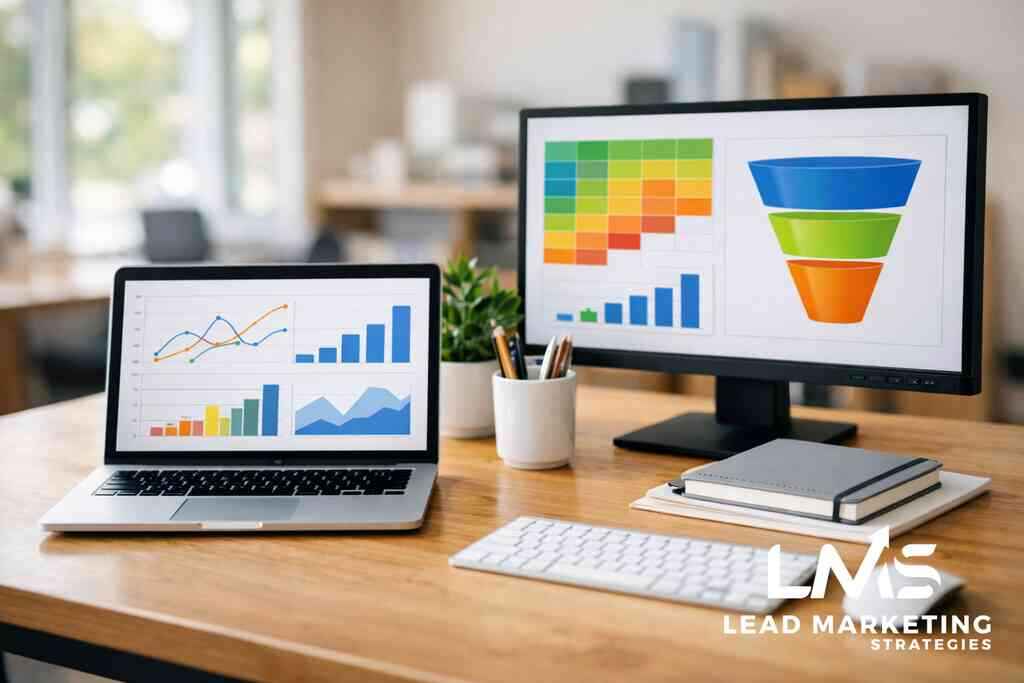
The role of user experience optimization, mobile-first website design, and page speed
User experience optimization starts with the basics: readable text, predictable layout, easy navigation, and fast loading. Mobile-first website design matters because many visitors will judge your business on a phone first, not a desktop monitor. If the hero image pushes the CTA down, or a pop-up blocks the screen, conversion optimization suffers immediately.
Page speed optimization is not cosmetic. Slow pages create bounce rate reduction problems and weaken lead generation. Google’s PageSpeed Insights is a useful starting point, but I also look at real-world behavior inside analytics. According to Google Search Central’s guidance on page experience, performance and usability remain part of how users experience your site, and that experience influences whether they stay or leave.
A simple way to compare design priorities:
Page elementBetter for conversionsWhy it helpsClear headlineYesTells visitors they are in the right placeLong sliderUsually noDelays the main message and CTAShort formYesReduces friction and increases completionsHeavy scriptsUsually noSlows load time and hurts mobile use### How to shape service pages, landing pages, and lead capture forms around intent
Service page optimization works best when the page matches the search intent. Someone looking for local SEO services wants proof, process, and a clear next step. Someone clicking a Google Ads management page wants speed, relevance, and a way to ask about budget. That is why landing page optimization is different from homepage optimization.
The cleanest structure is simple:
- State the service and audience.
- Show the benefit in plain language.
- Add trust signals and proof points.
- Use one main call to action.
- Keep the form short.
I have seen this work especially well for ecommerce marketing and B2B marketing pages. A form with too many fields can overwhelm people who are already halfway convinced. If you need a better fit for lead capture forms, a targeted page built around audience targeting often works better than sending traffic to a general contact page. For businesses that need help with web design and development together, our web design services are built to support that kind of intent match.
Where most conversion strategies break down after the click
Most conversion strategies fail after the click because they stop measuring behavior. A page may attract visits, but you need to know where people hesitate, scroll away, or abandon the funnel. That is where conversion funnel analysis, marketing analytics, and ROI tracking become practical, not theoretical.
How A/B testing, heatmap analysis, and conversion funnel analysis reveal the real problem
A/B testing for websites tells you which version performs better, but it only works if you test one meaningful change at a time. Heatmap analysis shows where people click, stop, or ignore content. Conversion funnel analysis shows the full path from page view to lead, and that helps you spot the weak link instead of guessing.
A small B2C lead generation campaign I reviewed recently had solid traffic from Facebook advertising, but the form drop-off was high. The heatmaps showed people clicking a non-clickable headline and missing the CTA button below it. That was not a traffic problem. It was a page logic problem. We see this kind of issue often in PPC landing page strategy, especially when the ad promise and the landing page message do not quite match.
A simple comparison helps:
ToolWhat it showsBest useA/B testingWhich version winsHeadline, CTA, form, and layout testsHeatmapsWhere people interactClick confusion and attention gapsFunnel analysisWhere users drop offEnd-to-end lead path diagnosis### Using marketing analytics, ROI tracking, and audience targeting to improve lead generation
Marketing analytics makes conversion optimization measurable. Without it, you are only reacting to opinions. With it, you can connect search engine optimization, email marketing, and paid traffic to actual lead outcomes. That is especially important for a national marketing agency working with companies in multiple regions, because the best pages for one audience may not work for another.
On the measurement side, I usually look for three things: source quality, page behavior, and lead quality. If Google Ads conversion tracking shows traffic but not qualified leads, the issue may be the offer, not the ads. If organic traffic from New York SEO content converts better than social traffic, that tells you where to invest. For businesses that need a more structured system, our digital marketing strategy guide and New York SEO services can help tie search visibility to measurable ROI.
I also like to ground recommendations in real business context. The SBA’s marketing guidance is a good reminder that small business marketing works best when promotion and sales follow a clear system. That is the same idea behind conversion-focused web design: attract the right people, then make it easy for them to say yes.
If you are in Commack or elsewhere on Long Island, you do not need a bigger site to get better results. You need a cleaner path from interest to action. From our office at Northgate Shopping Center off Jericho Turnpike, we see that pattern all the time. If your current setup feels close but not quite there, a focused review from a Long Island marketing agency like Lead Marketing Strategies can turn guesswork into a repeatable marketing strategy. You can also call +1 833-532-3100 or download the Lead Marketing Strategies app when you are ready to map out the changes with our team.
Frequently Asked Questions
Question: How can Lead Marketing Strategies help improve website conversion rate improvement for a small business website?
Answer: Lead Marketing Strategies focuses on the parts of the site that most often affect conversion optimization: homepage optimization, service page optimization, call-to-action optimization, form optimization, mobile-first website design, and page speed optimization. For small business marketing, the goal is not just to bring in traffic, but to remove friction so more visitors take the next step. That can mean clarifying the headline, improving trust signals on websites, tightening the navigation, and making lead capture forms easier to complete. As a Long Island marketing agency serving Commack, Suffolk County, and all 50 states, LMS can also align the website with the right marketing strategy for small business, whether the focus is local SEO services, PPC management, or content marketing for conversions.
Question: What should a digital marketing agency look for first when doing conversion optimization on a website?
Answer: The first things to review are message clarity, user experience optimization, and whether the page matches the visitor’s intent. A strong digital marketing agency should look at how quickly the site explains what you do, who you help, and what action the visitor should take next. After that, it is smart to evaluate website usability improvements, navigation improvements, audience targeting, and social proof placement. At Lead Marketing Strategies, that process is designed to support lead generation, brand awareness, and ROI tracking without making assumptions. We look for the gaps that can weaken online lead generation, including slow pages, confusing layouts, weak calls to action, or forms that ask for too much information.
Question: Can Lead Marketing Strategies improve landing page optimization for PPC landing page strategy and Google Ads conversion tracking?
Answer: Yes, landing page optimization is one of the most important parts of a strong PPC landing page strategy. If someone clicks from Google Ads management or Facebook advertising, the landing page should match the ad promise immediately and keep the path to conversion simple. That usually means one clear offer, persuasive copywriting, trust signals on websites, and a short form with a strong CTA. Lead Marketing Strategies can also help connect landing page performance with Google Ads conversion tracking and broader marketing analytics so you can see where leads are coming from and where people drop off. That kind of conversion funnel analysis is especially useful for B2B lead generation, B2C lead generation, ecommerce conversion optimization, and local campaigns targeting Commack marketing agency and Suffolk County marketing audiences.
Question: What does the blog How to Improve Conversion Optimization on Your Website mean for SEO services and content marketing strategy?
Answer: The main idea behind How to Improve Conversion Optimization on Your Website is that search engine optimization and conversion optimization work best together. SEO services can bring in qualified traffic, but if the page is weak, the traffic will not turn into leads. That is why content marketing strategy, persuasive copywriting, and content strategy services should support conversion-focused web design. A page can rank well for New York SEO or local SEO services, but still underperform if the CTA is vague, the page speed is slow, or the form is too long. Lead Marketing Strategies helps connect search engine optimization, web design company best practices, and audience targeting so that your traffic has a better chance of becoming actual inquiries, sales, or booked consultations.
Question: How does Lead Marketing Strategies use marketing analytics and A/B testing for websites to support conversion rate optimization?
Answer: Marketing analytics and A/B testing for websites are key to making smart improvements instead of guessing. Lead Marketing Strategies can review user behavior, identify friction points, and test changes to headlines, button copy, form length, page layout, and trust signals on websites. This helps support bounce rate reduction and gives you a clearer view of what improves conversion optimization over time. Heatmap analysis and conversion funnel analysis can also reveal where visitors are paying attention, where they pause, and where they leave. For businesses that want stronger ROI tracking, especially in ecommerce conversion optimization, B2B marketing, and digital marketing strategy planning, this data-driven approach helps guide changes that support lead generation and long-term growth.